Soil pH for Blueberries: The 4.5–5.5 Rule
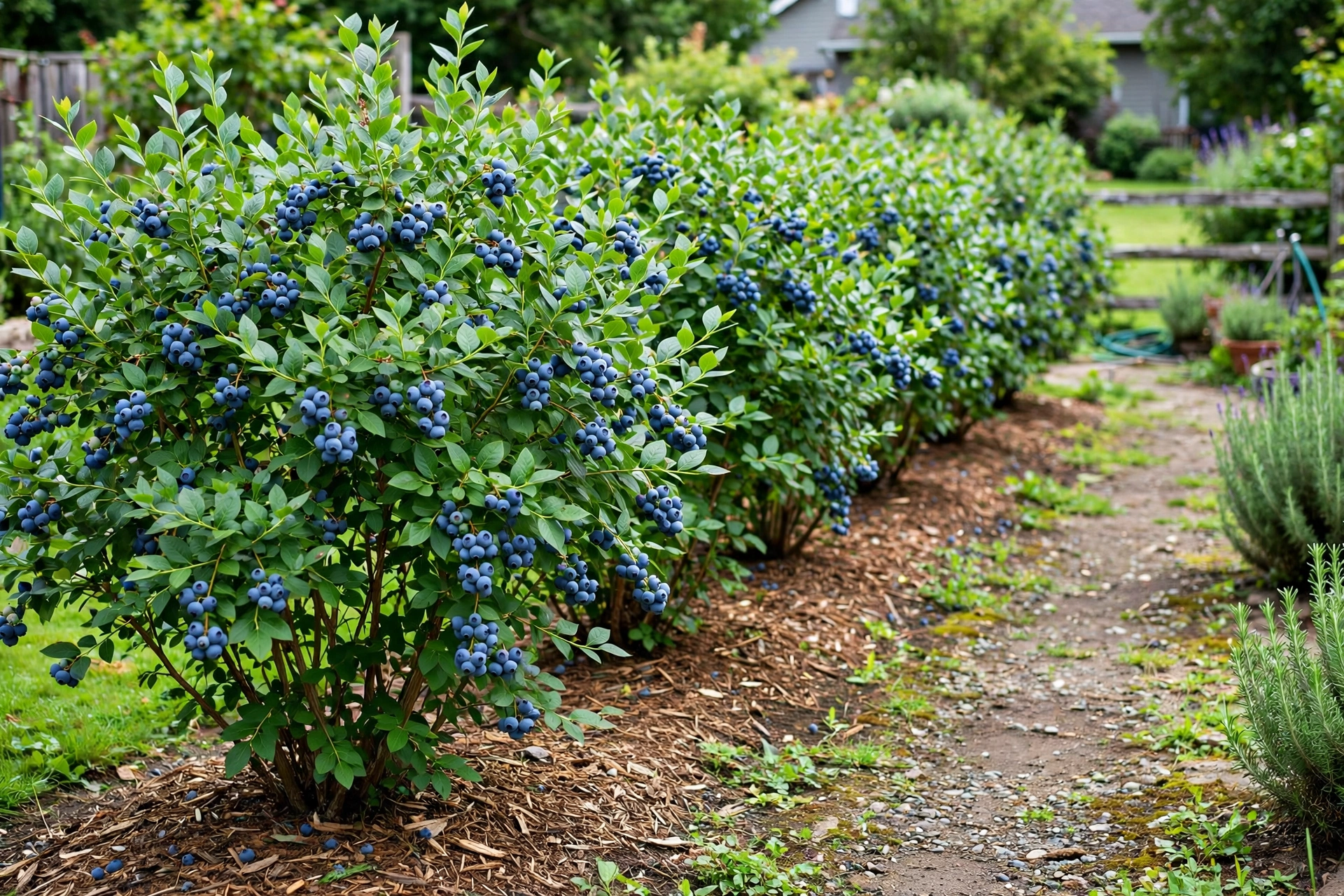
Blueberries evolved in acidic, boggy soils, and their roots never forgot it. Between pH 4.5 and 5.5 they can absorb iron and other nutrients; much above 5.5, those nutrients lock up and the bush shows it — pale, yellowing leaves with green veins, weak growth, little fruit — even in soil that grows everything else beautifully.
Test before you plant
A $15 soil test through your state extension service (or a decent home kit) tells you where you start. U.S. garden soils commonly sit at 6.0–7.0 — too alkaline for blueberries without amendment. Above pH 6.5–7.0 in the ground, extension guides are blunt: build a raised bed with acidic mix, or grow in containers instead of fighting your soil for a decade.
Lowering pH with elemental sulfur
Soil bacteria convert elemental sulfur to acid slowly — plan on 3–6 months, which is why fall application for spring planting is the classic schedule. Ohio State Extension's guide gives these amounts of sulfur per 100 sq ft to reach about pH 4.5: from pH 5.5, about 0.8 lb in sand, 2.4 lb in loam, 2.6 lb in clay; from pH 6.5, about 1.5 lb in sand, 4.6 lb in loam, 4.8 lb in clay. Work it into the top 6 inches. Never use aluminum sulfate on blueberries — they are sensitive to excess aluminum.
The planting-hole shortcut
Mixing a generous amount of peat moss or milled pine bark into each planting hole (extension guides suggest roughly 2–4 gallons per hole) acidifies the root zone immediately while the sulfur works on the wider bed. Mulch with pine bark or pine needles afterward and the surface stays friendly too.
Ready to choose a variety?
The Finder matches varieties to your zone, chill and space in four questions.