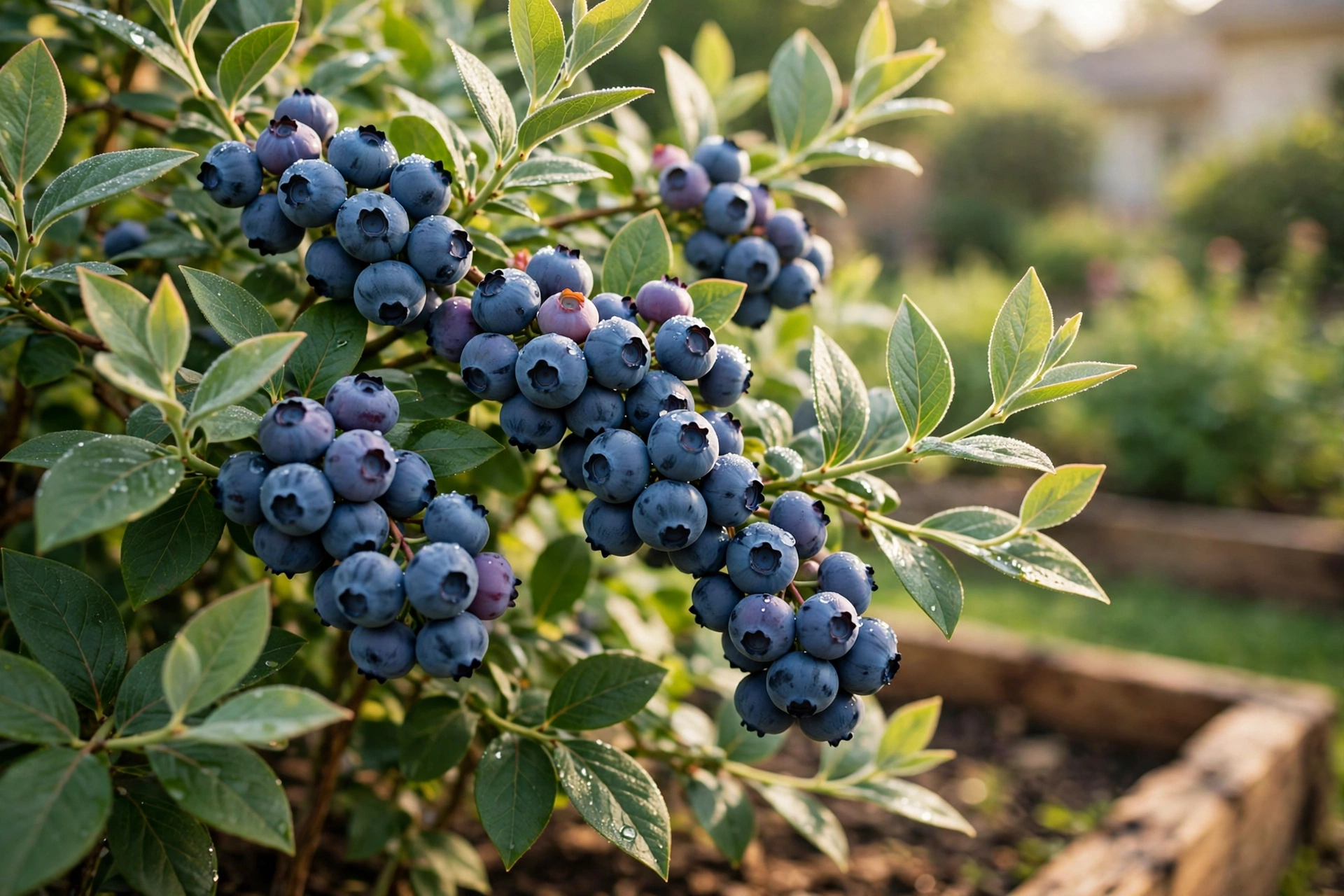
Pick the right bush. Pick berries for decades.
A blueberry bush can fruit for 30 years — or fail in year two because its chill hours, soil pH or pollination partner were wrong. This guide matches varieties to your zone first, then shows you real nursery prices and the planting know-how that makes bushes thrive.
Find my variety Shop curated patches Browse all 23 varieties
Start with your climate, not a catalog photo
Cold North — Zones 3–7
Northern Highbush and Half-High types need real winter (800–1,000 chill hours) and repay it with the classic blueberry flavor. Start with Duke, Patriot and Bluecrop.
Northern varieties →Warm South — Zones 7–10
Southern Highbush and Rabbiteye types were bred for low chill and summer heat. Misty, O'Neal, Emerald and the rabbiteye trio crop where northern bushes would never wake up properly.
Southern varieties →Patios & small spaces
Dwarf bushes fruit happily in big pots — if you use acidic mix and water faithfully. Sunshine Blue (warm) and Top Hat / Northblue (cold) lead the patio list.
Best for containers →The four bushes most Americans should plant first
Duke
Early — first of the season · Large, firm berries · 4–6 ft tall · ~800–1,000 chill hours
Bluecrop
Mid-season — the peak · Large, firm, light blue berries · 4–6 ft tall · ~800–1,000 chill hours
Patriot
Early · Very large — among the biggest early berries berries · 3–5 ft tall · ~800–1,000 chill hours
Chandler
Mid to late — up to 6 weeks of picking · Extra-large — among the largest of any blueberry berries · 5–6 ft tall · ~800–1,000 chill hours
The three decisions that decide everything
1. Chill hours. A bush that needs 900 hours in a 300-hour winter leafs out weakly and barely fruits. Match chill to your climate →
2. Soil pH 4.5–5.5. Blueberries are acid-lovers in a way few garden plants are. At pH 6.5 they starve in plain sight — green-poor, yellow-leaved, fruitless. Test before you plant; sulfur fixes it slowly. The pH guide →
3. A pollination partner. Most highbush are self-fertile but crop bigger with a second variety nearby. Rabbiteyes require a different rabbiteye variety. Plan your pairing →
One bush is a snack. A patch is a harvest.
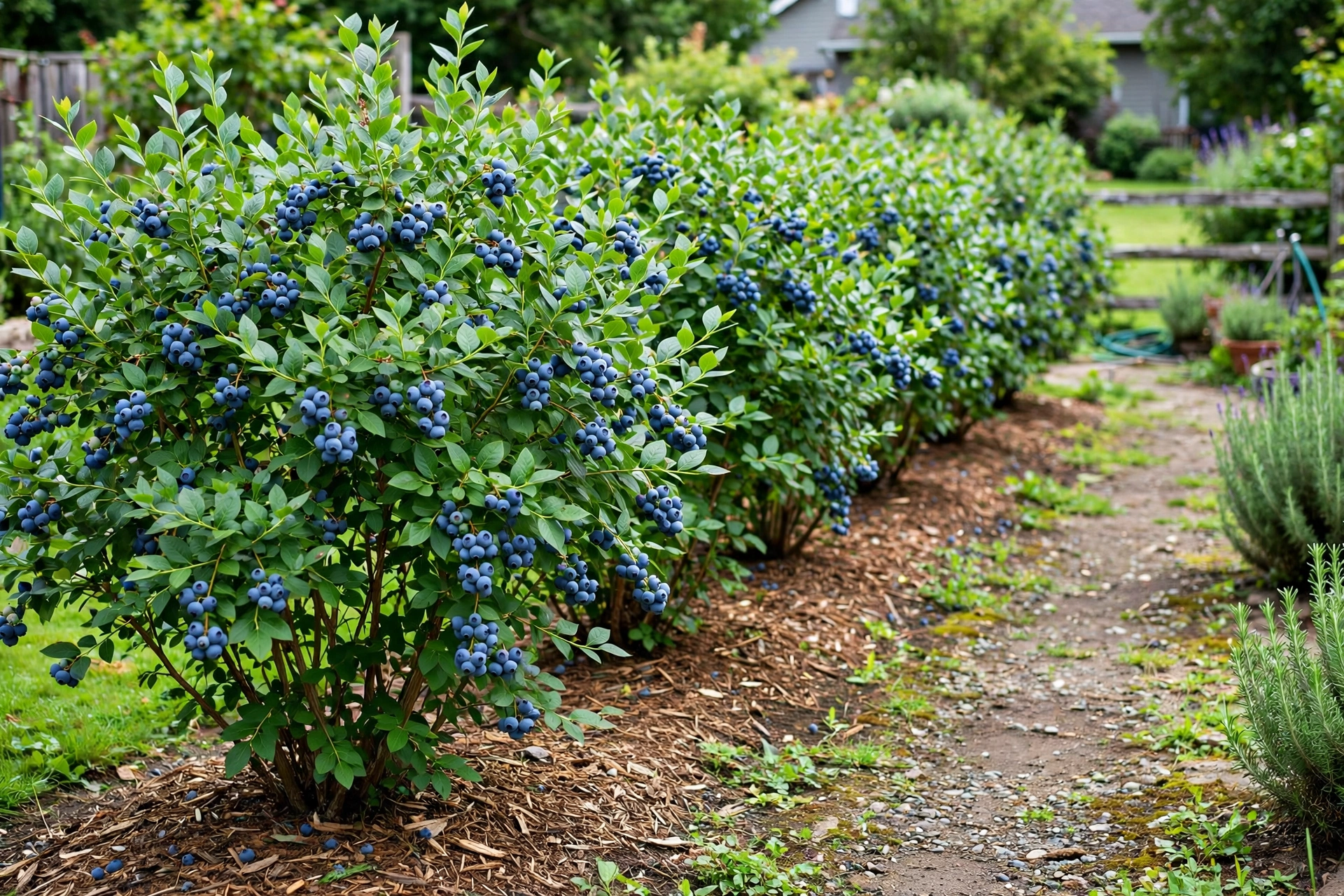
Plant an early, a mid and a late variety together and the picking stretches from about two weeks to six or more — with better pollination on every bush. Our patch calculator works out spacing, expected mature yield and what that fruit would cost at the store, and the shop bundles the classic trios nurseries sell out of first each spring.
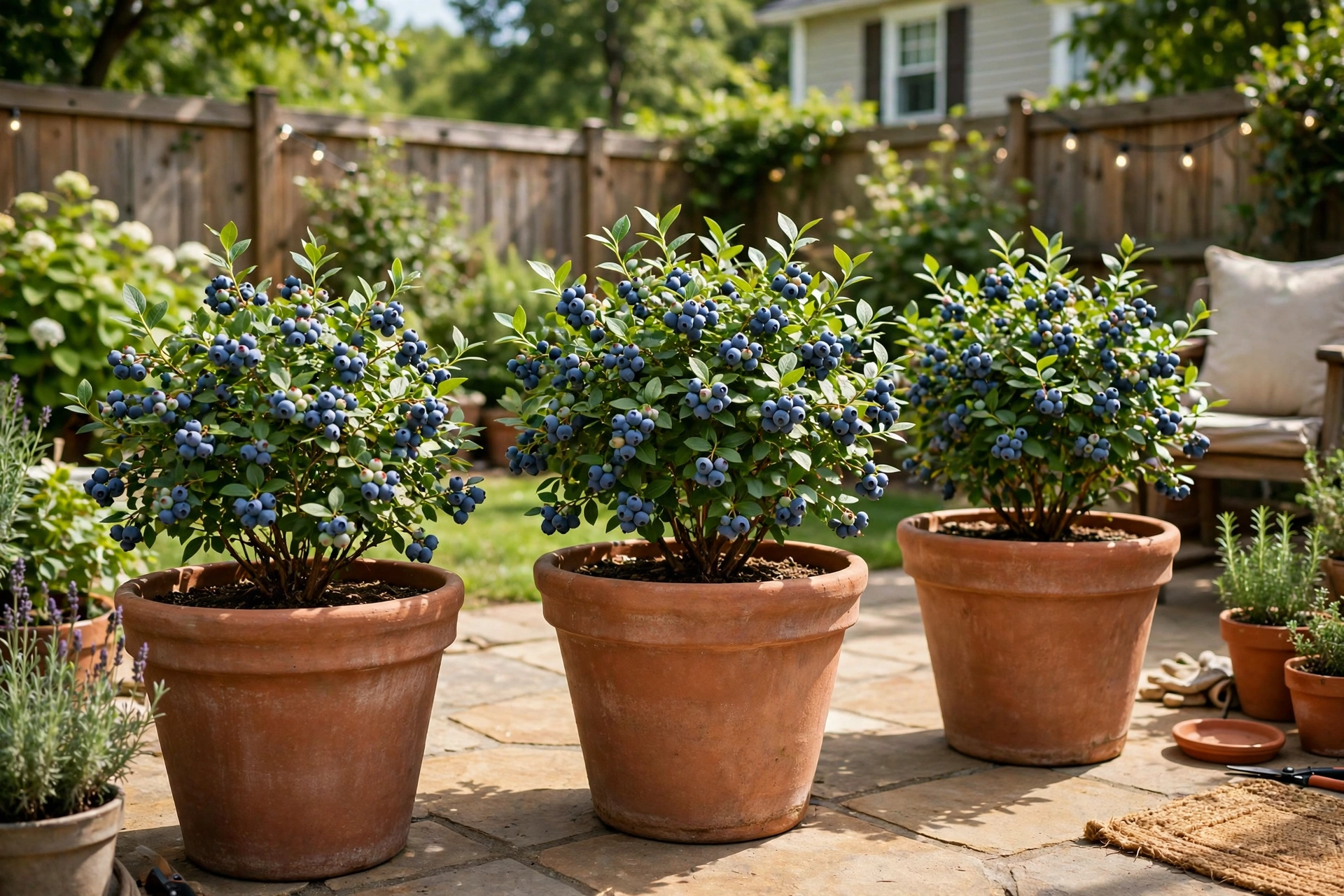
No garden bed? No problem.
Compact varieties in 5-gallon-plus pots, an acidic potting mix and consistent watering will fruit on a patio or balcony in most of the country. The container playbook →
Tools that bring growers back
Variety Finder
Four questions — zone, space, goal, harvest timing — and a specific shortlist.
Take the quiz →Pollination Planner
Pick a variety, get its compatible partners and spacing in seconds.
Plan a patch →Planting Calendar
Plant, prune and feed windows by zone, plus calendar reminders to download.
Get my calendar →The Blueberry Letter
Planting windows for your zone, pruning reminders at the right month (not a month late), and price checks on the varieties worth buying — a few times a year, timed to the blueberry calendar. No spam, unsubscribe anytime.